Test Tube Setup
Use a standard 12 mm or 16 mm test tube with a water reservoir. Tetramorium workers are very small (2.5–4 mm), so pack the cotton plug tightly — even tiny gaps will allow them to escape. A rubber stopper with a drilled hole plugged with fine mesh is even more secure. Keep the tube in darkness at 22–26 °C.
Formicarium
Once the colony reaches 30–50 workers, transition to a formicarium. Good options for this small species include:
- Ytong nests::Carve narrow tunnels (2 mm wide) and small chambers (3–4 mm tall). The porous material provides excellent humidity regulation.
- Plaster nests::Inexpensive and easy to make. Pour dental plaster into a container, use clay or sculpting tools to form chambers and tunnels before it sets.
- Acrylic sandwich nests::Great visibility. Choose a "small species" model with appropriately sized tunnels.
- 3D-printed nests::Increasingly popular, with designs specifically for small species available from community sellers.
Avoid nests designed for large species like Camponotus — oversized chambers stress small ants and make it difficult for workers to tend brood effectively.
Outworld
A small plastic container (takeaway container or lab dish) with fluon or PTFE barriers works well. Because Tetramorium workers are tiny, apply barriers carefully and check for any microscopic gaps. Baby powder mixed with rubbing alcohol is an additional barrier option. Provide a water source and feeding stations.
Recommended Supplies
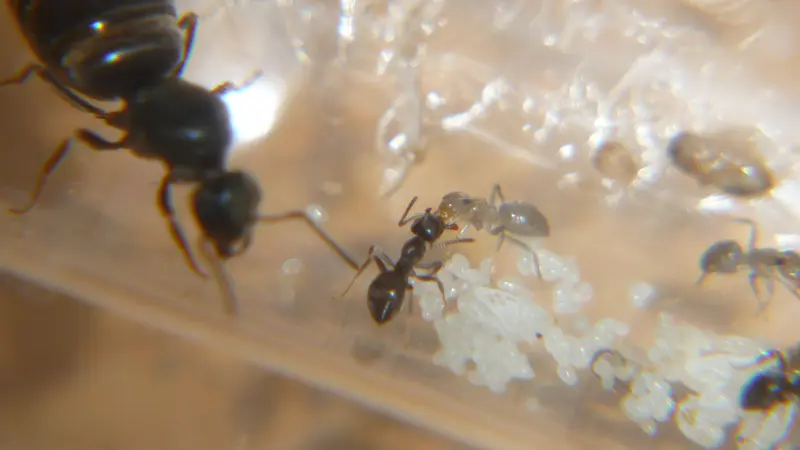
Protein
T. immigrans has a broad diet and readily accepts most protein sources:
- Insects::Fruit flies, pinhead crickets, small mealworm pieces, springtails. Cut larger prey items into manageable pieces for small colonies.
- Hard-boiled egg yolk::Extremely well-accepted. A tiny crumb provides ample protein for a small colony.
- Freeze-dried bloodworms::Available at pet stores. Rehydrate a small piece before offering.
Sugar
Offer sugar water (1:4 ratio) or diluted honey as a constant energy source. Tetramorium workers are not as sugar-fixated as Lasius but still need regular carbohydrate supplementation.
Seeds
Uniquely among common beginner species, T. immigrans is partially granivorous — workers collect and consume small seeds. Offer:
- •Chia seeds
- •Poppy seeds
- •Finely crushed birdseed
- •Quinoa (raw)
Seeds provide a slow-release food source and are especially useful as supplemental feeding during vacations. Scatter a few seeds in the outworld and the ants will carry them into the nest to process.
Grease & Fats
Pavement ants are sometimes called "grease ants" because they are attracted to fatty foods. A tiny drop of olive oil, a sliver of nut butter, or a small piece of cooked (unseasoned) meat is eagerly collected. Do not overdo fatty foods — they turn rancid quickly.
Frequency
- Under 50 workers::Sugar always available, protein every 3–4 days, a few seeds scattered in outworld.
- 50–500 workers::Sugar always available, protein every 2 days, seeds refreshed weekly.
- 500+ workers::Sugar always available, daily protein, seeds and grains ad libitum.
Water
Keep a fresh water source in the outworld at all times. A cotton-plugged test tube water tower prevents drowning and provides steady hydration.
Feeding Supplies
Required?
Yes — hibernation is required. As a temperate species originally from Europe and now established across cooler North American climates, T. immigrans needs a cold dormancy period for long-term queen health and colony vigor.
Duration
4–5 months, November through March. A minimum of 10–12 weeks of cold is recommended. This species naturally experiences extended winters in its range and tolerates longer hibernation periods without issue.
Temperature Range
5–10 °C (41–50 °F). These ants are cold-hardy and can survive brief dips to near freezing, but sustained temperatures below 3 °C should be avoided in captivity.
Preparation
- 1In October, gradually reduce temperature by moving the colony to a cooler room (15–18 °C) for 1–2 weeks.
- 2Offer a generous feeding of protein and sugar before the final cooldown.
- 3Ensure all water reservoirs are topped off.
- 4Remove or disconnect the outworld to prevent wandering during dormancy.
- 5Move to the hibernation location (wine cooler, garage, unheated room).
Waking
In March, reverse the process over 1–2 weeks. Move from cold storage to a cool room (15 °C) for a week, then to room temperature. Provide sugar water immediately and protein within a day. Brood production resumes within 1–3 weeks.
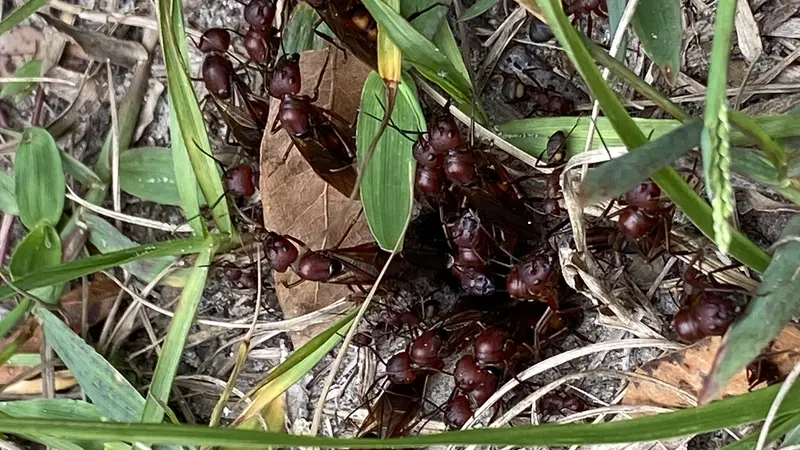
Season & Conditions
Nuptial flights occur primarily in June and July in the northeastern United States, sometimes extending into early August in cooler regions. Flights launch on warm, humid afternoons and evenings, usually at temperatures above 24 °C. They are smaller in scale than Lasius niger flights but still produce large numbers of queens.
Catching Queens
After mating, look for wingless queens on:
- •Sidewalks and pavement (their preferred nesting habitat)
- •Building foundations and walls
- •Under rocks and paving stones — turn over flat stones near known colonies to find freshly mated queens that have already begun founding
Queens are 7–8 mm long, stocky, and dark brown to black with faint ridges on the head and thorax (visible under magnification). They are notably larger than workers (2.5–4 mm) and move slower.
Post-Flight Tips
- •House queens individually or in groups of 2–3 to attempt polygynous founding. Multi-queen colonies often grow faster in the first year.
- •Set up test tube water reservoirs and store in darkness.
- •Eggs appear within 1–2 weeks; first workers in 6–8 weeks.
- •If attempting pleometrosis, monitor for aggression once workers arrive. Separate queens immediately if fighting occurs.