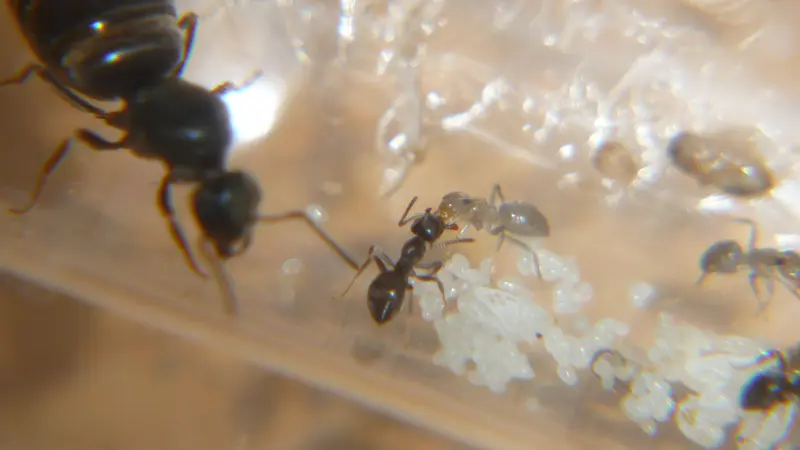
Founding Stage (Test Tube Setup): Use a standard 16x150mm or 20x150mm glass test tube with a water reservoir. Pogonomyrmex queens are large and appreciate the extra space of a 20mm tube. Keep the setup in a dark, warm (28-30°C) location. Do not disturb the queen during the founding period — harvester ants are sensitive to vibration and may cannibalize brood if stressed. Expect the first nanitics after 6-8 weeks.
Early Colony (30-200 workers): Harvester ants are natural diggers, and many keepers provide a sand or sand-clay substrate in a vertical formicarium or naturalistic setup. A thin-profile acrylic nest or ytong (autoclaved aerated concrete) nest also works well. The key requirement is that the nest must be kept dry — harvester ants come from arid environments and are highly susceptible to mold in humid conditions.
A separate outworld is essential for foraging. Line it with fine sand or leave it bare. Provide a foraging area where seeds can be scattered.
Growing Colony (200+ workers): Larger colonies benefit from naturalistic dirt-farm style enclosures where ants can dig their own tunnel networks. Use a mix of fine sand and clay (roughly 70:30) to provide stable tunnel walls. Alternatively, multi-chamber ytong nests connected to a large outworld work well. Harvester ants are active foragers and appreciate a spacious outworld with obstacles and terrain features.
Substrate Considerations: If using a naturalistic sand setup, choose fine-grained play sand or desert sand. Avoid sharp silica sand, which can damage the ants' exoskeletons. A depth of 10-15cm allows meaningful tunnel excavation. Slightly misting the deeper layers while keeping the surface bone-dry mimics the natural moisture gradient in desert soil and helps tunnel stability.
Escape Prevention: Pogonomyrmex workers are large enough that escape prevention is more straightforward than with tiny species. Standard Fluon (PTFE) barriers on outworld walls are effective. These ants are strong climbers but not as persistent as smaller species. Ensure lids fit snugly and ventilation holes are appropriately sized (2-3mm mesh is sufficient). Despite being easier to contain than tiny species, always maintain barriers — harvester ant stings are extremely painful, and an escaped worker in your home is a serious hazard.
<!-- AFFILIATE: sand/clay substrate, ytong formicarium, naturalistic ant farm -->
Recommended Supplies
Pogonomyrmex barbatus is primarily a granivore — seeds form the staple of their diet, which is unusual among captive ant species and one of their most interesting behaviors.
Seeds (Primary Diet): Offer a variety of small seeds as the dietary foundation. Excellent choices include chia seeds, flax seeds, poppy seeds, grass seeds, sesame seeds, and small bird seed mixes (canary seed, millet). Scatter seeds in the outworld and let the workers collect and store them in designated seed chambers — watching this harvesting behavior is one of the great pleasures of keeping this species. Feed seeds every 3-5 days or when granary chambers appear depleted.
Workers process seeds by removing the husk and chewing the nutritious endosperm into a paste called "ant bread" which is fed to larvae. You may notice small piles of discarded seed husks (middens) near the nest entrance — this is normal and healthy behavior.
Protein (Supplemental): While seeds are the staple, growing colonies with active brood benefit from supplemental protein. Offer small insects (fruit flies, pinhead crickets, or cut mealworms) once a week. Protein is particularly important in spring and summer when brood production is highest. Do not over-feed protein — these ants are adapted to a seed-heavy diet and too much insect matter can cause waste buildup in the nest.
Sugar: Harvester ants have a low sugar requirement compared to sugar-loving species like Lasius or Camponotus. A small drop of diluted honey (1:4 with water) once a week is sufficient. Some keepers skip sugar supplements entirely when feeding a diverse seed mix.
Water: Provide a water source in the outworld — a test tube reservoir or a small dish with cotton. Despite being a desert species, harvester ants do need access to water. In the wild, they obtain moisture from seeds and early morning dew, but captive colonies should always have water available. Place the water source away from the seed storage area — harvester ants keep their granaries dry, and excess moisture near stored seeds encourages mold and germination.
Foraging Behavior: One of the joys of keeping Pogonomyrmex is watching their organized foraging behavior. Workers follow well-defined trails to food sources and carry seeds back to the nest in their mandibles, often in long single-file columns. They will create dedicated midden piles of discarded seed husks outside the nest entrance — a fascinating replica of their wild behavior. Do not clean up middens unless mold develops; workers use them as markers.
<!-- AFFILIATE: seed variety pack for ants, insect feeders, test tube water reservoir -->
Feeding Supplies
Hibernation is required for Pogonomyrmex barbatus. Skipping hibernation leads to reduced queen longevity, poor brood production the following season, and overall colony decline. In the wild, these ants experience a cool, dry winter in the desert Southwest.
Duration: Approximately 2-3 months, typically December through February.
Temperature: Cool the colony gradually over 2 weeks to a target temperature of 10-15°C (50-59°F). A wine cooler, garage, or unheated room can provide suitable temperatures. Do not freeze the colony — sustained temperatures below 5°C can be lethal.
Preparation: Beginning in late October, reduce feeding frequency and allow the colony to consume stored seeds. Remove any remaining uneaten protein from the outworld. As temperatures cool, worker activity will naturally decrease. Ensure the water reservoir is full before hibernation begins, as the colony will still need some moisture access during the dormant period.
During Hibernation: Check the colony briefly every 2-3 weeks to ensure the water supply has not dried out. Do not feed during hibernation. Activity will be minimal — workers may cluster in the deeper chambers. This is normal.
Waking Up: In late February or early March, gradually warm the colony over 1-2 weeks back to normal temperatures (24-28°C). Resume feeding with seeds first, then reintroduce protein after a week. The queen will begin laying eggs within 2-3 weeks of warming, and the colony will ramp up activity through spring.
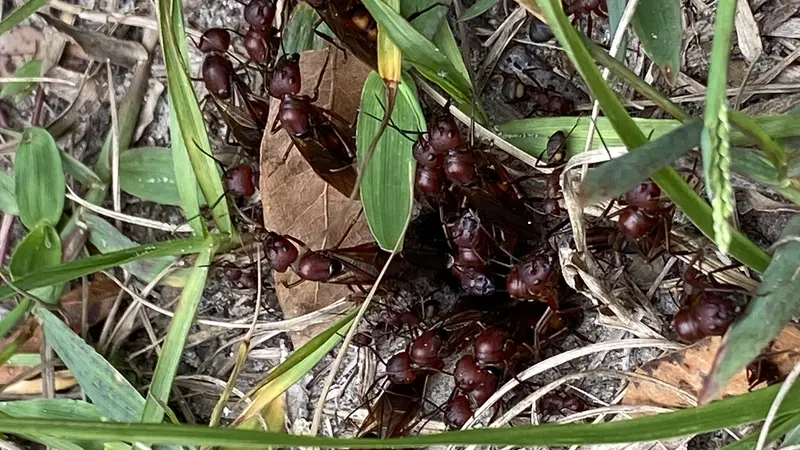
Pogonomyrmex barbatus nuptial flights are among the most spectacular and predictable in North American ant keeping. Flights are tightly linked to the summer monsoon season in the desert Southwest, occurring from July through September, with peak activity in July and August.
Conditions: Flights are triggered by monsoon rainstorms. Typically, flights occur on warm mornings (starting at sunrise) 1-2 days after a significant rain event when the ground is still moist and humidity is elevated. Thousands of alates (winged reproductives) emerge from mature colonies in a synchronized mass event. Mating occurs in the air at considerable height, and newly mated queens land and immediately begin searching for a nest site.
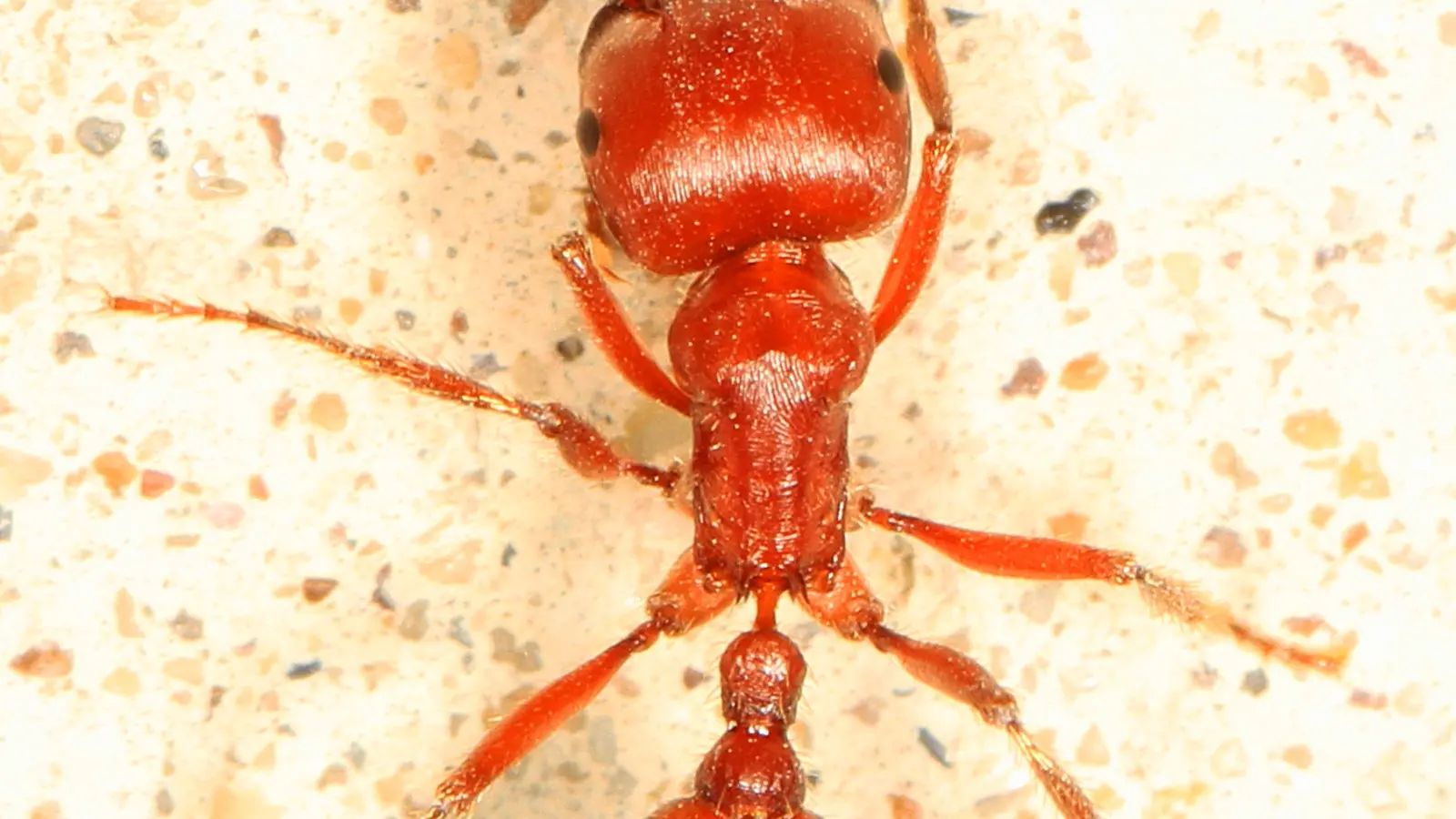
Catching Queens: Search open desert, grassland, and disturbed areas (roadsides, parking lots, cleared land) in the morning hours following a monsoon rain. Freshly mated queens are large (10-12mm), reddish, and conspicuous as they walk across open ground. They will have already shed their wings. Collect queens gently with a soft brush or by coaxing them into a vial. Avoid grasping them directly — their sting is painful.
Post-Flight Tips: Place queens in test tube setups immediately and keep them at 28-30°C in complete darkness. Do not disturb for at least 6 weeks. Pogonomyrmex queens are highly sensitive to vibration during the founding phase. Consider placing the test tube in a foam-padded box in a quiet closet.
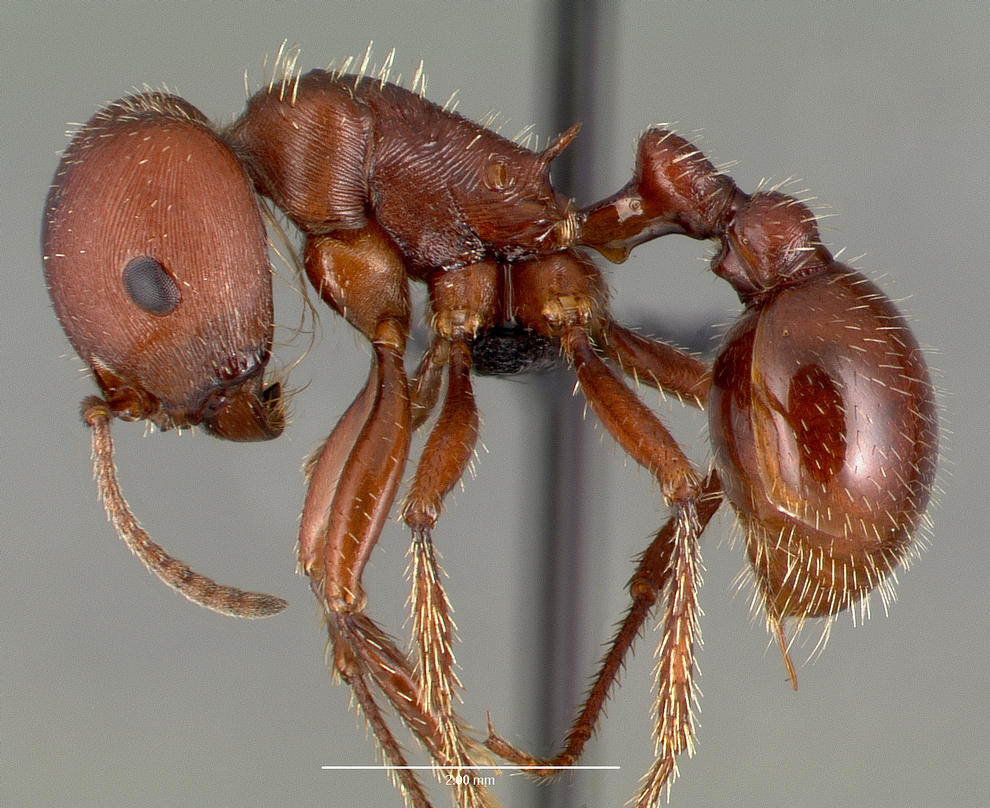
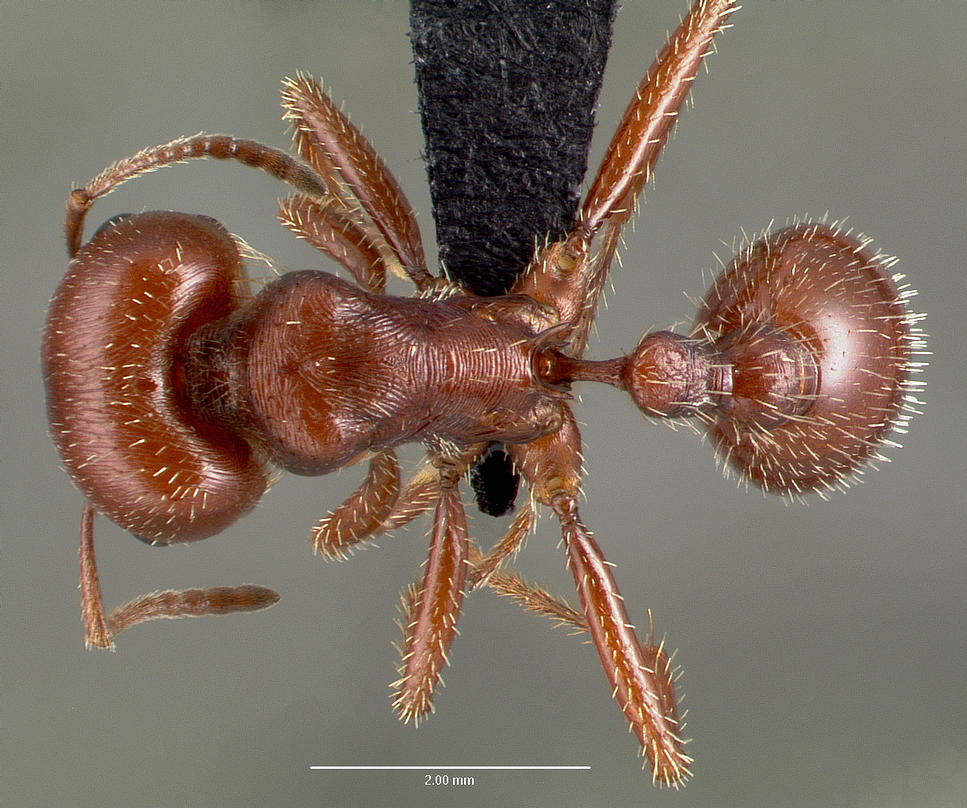
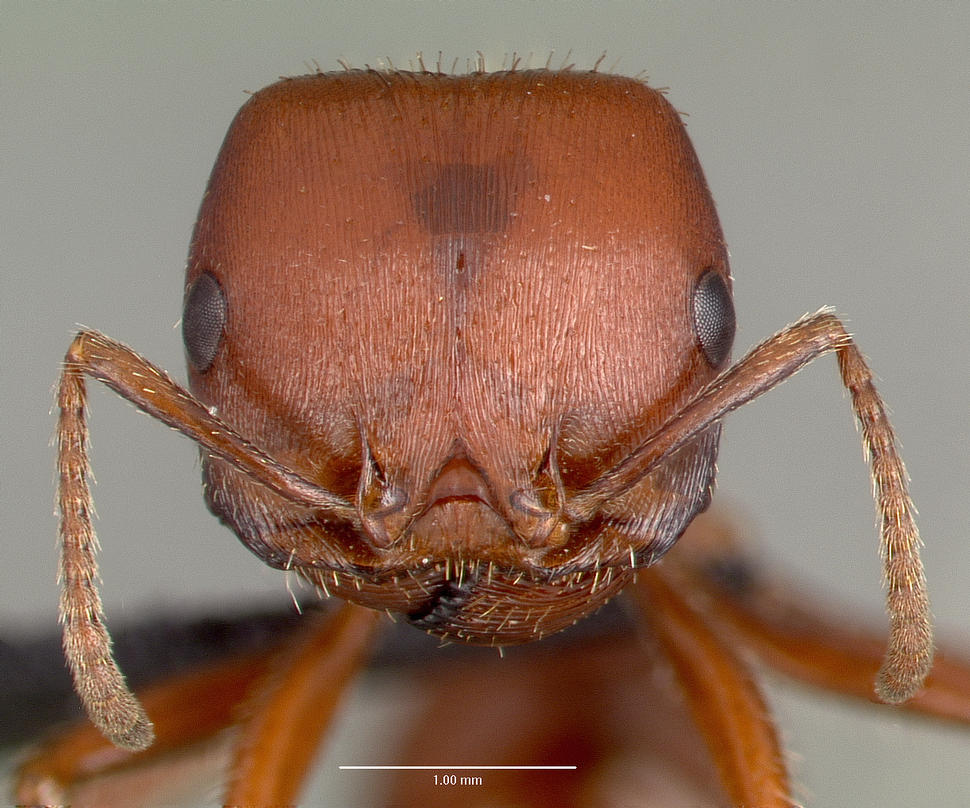
Identification Notes: Pogonomyrmex barbatus queens are large, robust, and distinctly reddish. They can be distinguished from other large red ants in their range by the psammophore — a fringe of long, curved hairs on the underside of the head, used for carrying sand grains during nest excavation. This "beard" (the name Pogonomyrmex literally means "bearded ant") is visible under a hand lens and is a definitive field mark for the genus. The propodeal spines (small backward-pointing spines on the thorax) are another key identification feature.